Scarcity as Inheritance and/or What the Small Hand Remembers
VICTOR PAYARES
LI XIA
Nanning Tea House, Guangxi, China
18 October – 18 November 2026
By Appointment Only

Cuba and China became comrades in 1960.
Havana was the first Western Hemisphere government to recognize Beijing. But the material history between them predates ideology: over 100,000 Chinese laborers built Cuba's sugar economy in the 19th century. They stayed. Married. Built what would become Havana's Chinatown. Rice and pork entered Cuban food not through politics but through the small hands that worked the fields and cooked the meals. The relationship between these two countries is older than revolution. It lives in the body. It lives in gesture.
This show examines what survives when systems collapse. Not ideology. Not institutions. The small hand. The gesture. What ordinary people remember when empires abandon them.
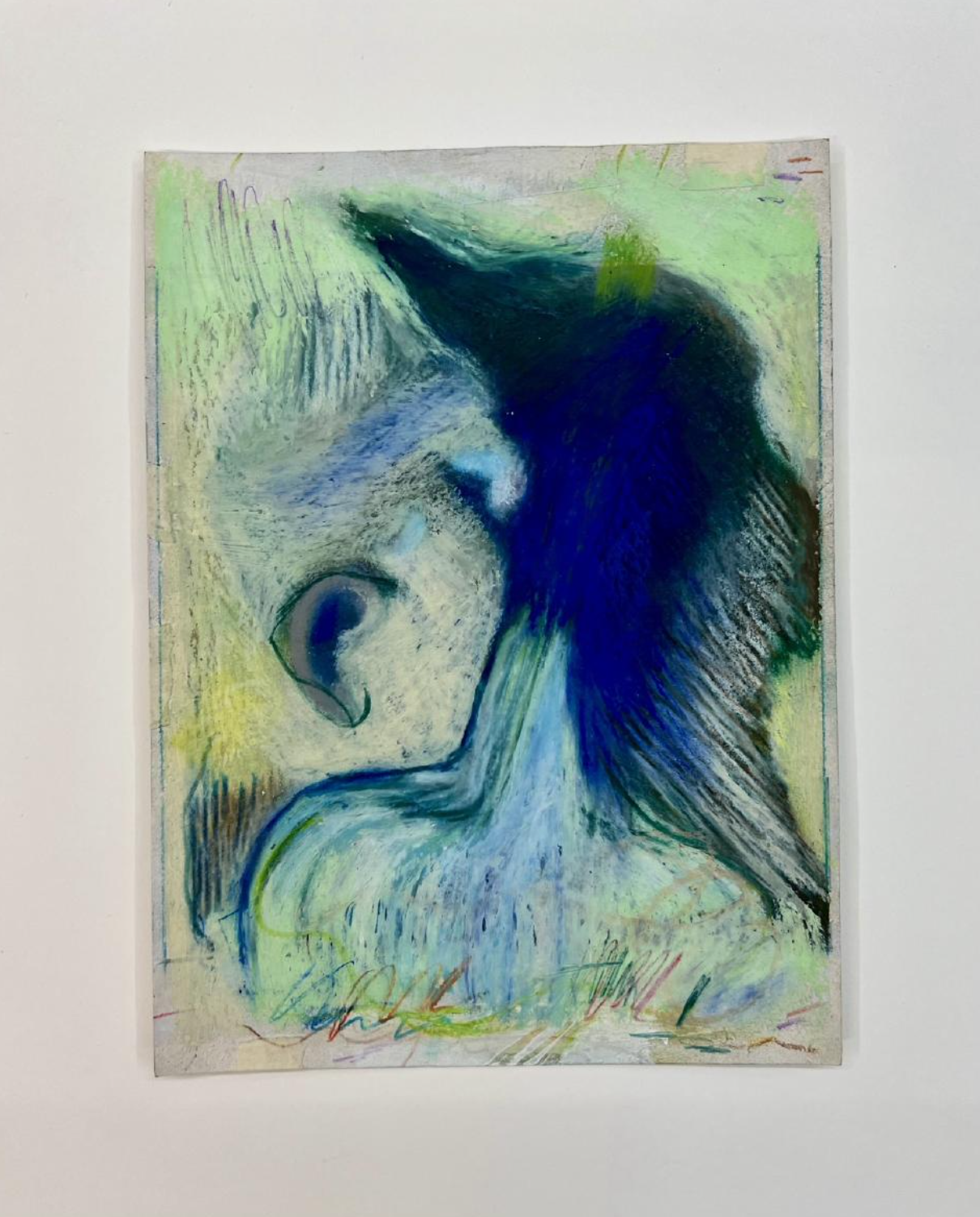
Victor Payares
(Havana, b. 1985) grew up during economic collapse. Power outages. Absence as lived condition. He learned that surfaces hold memory - what's underneath, what's been painted over, what a hand can strip away and rebuild.
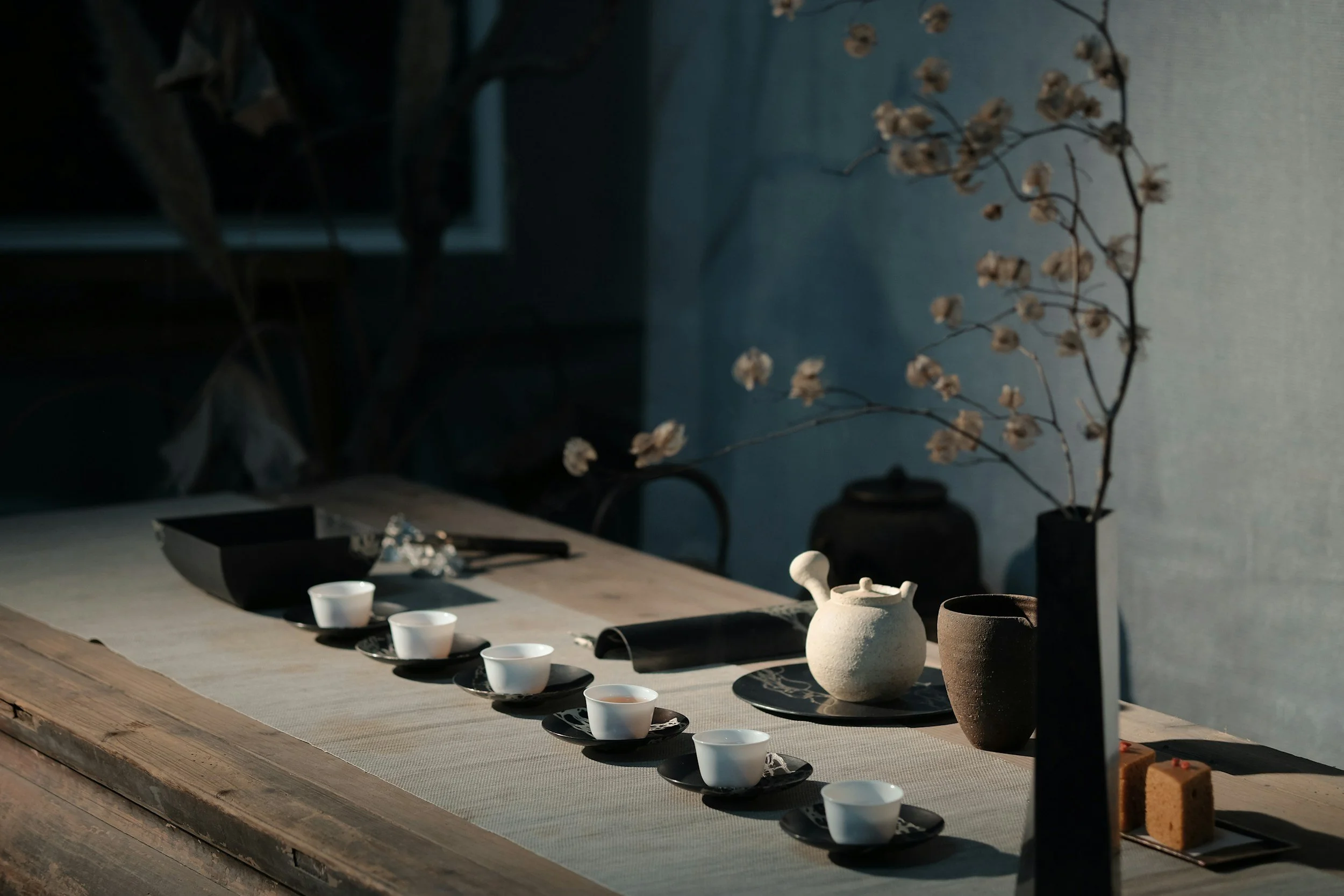
His method: work a surface, scrape it back to nothing, rebuild without starting clean. This is Havana. He paints by reduction. Three paintings here. Pigment and gesture. What remains after everything else is gone. In a tea house, these works sit among objects touched by small hands for centuries—cups held, leaves poured, tables tapped in gratitude. Payares' reduction asks: what survives the hand's erasure? What does labor look like when you strip away everything but the essential mark?
Li Xia
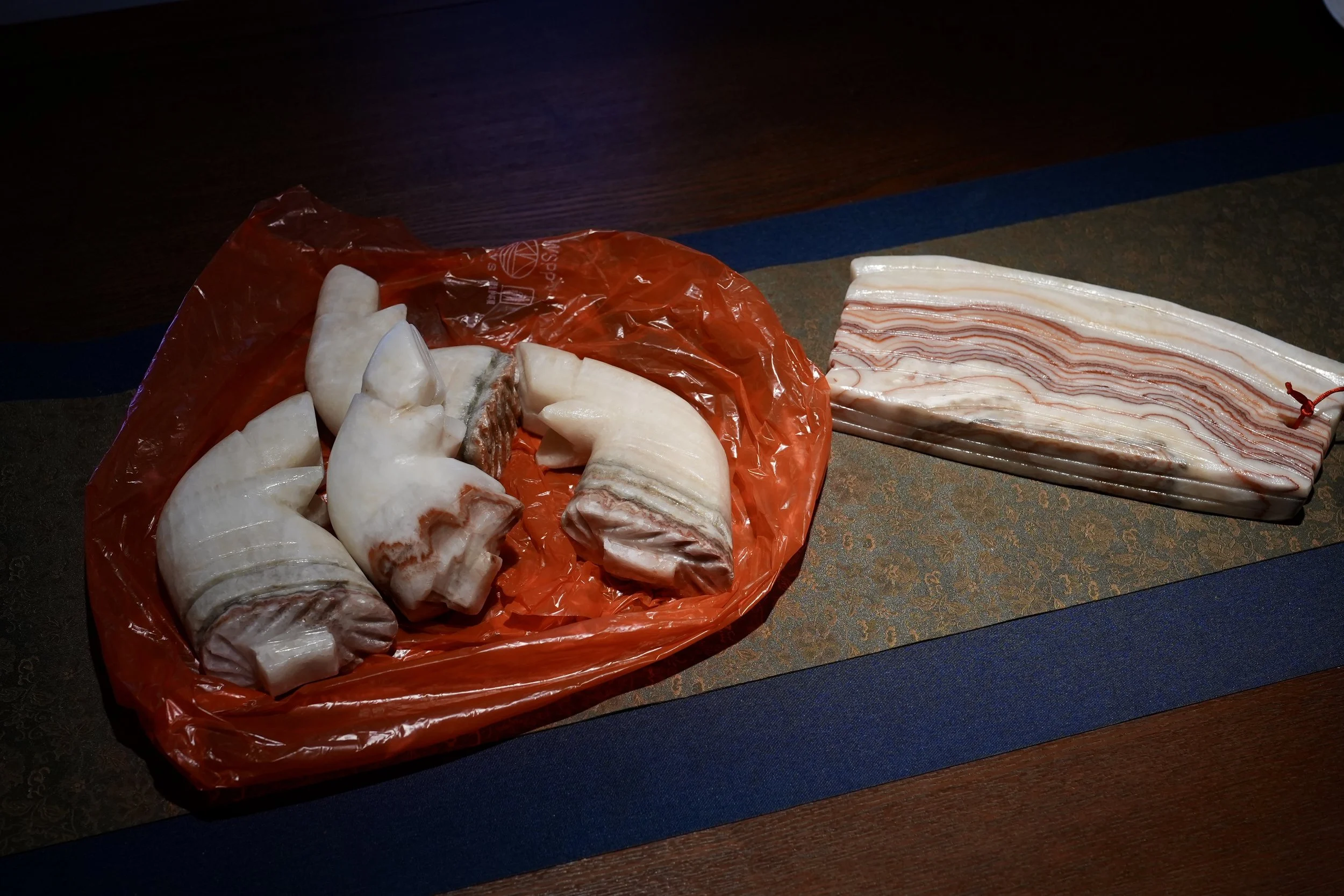
has spent decades documenting what small hands make and what gets discarded. Photographs. Charcoal. Ten terabytes of archive - the market stall, the cloth, the pork trotter before consumption. Her practice is systematic documentation of labor the market renders invisible.
For this exhibition: pork carved into jasper, veined pink and grey like flesh, placed on red plastic. The plastic references 1970s China, when pork was rationed - eaten once yearly as celebration. The red bag was the gesture of that day. A small hand's gratitude. Now, decades later in abundance, older Chinese households still hoard, still remember scarcity through gesture and habit. The stone renders permanent what was always meant to be consumed. The archive preserves what small hands made.
The Liubao ceremony structures everything.
Three aged infusions spanning decades. The progression demonstrates invisible labor: fermentation, storage, knowledge, time. But more: when tea is poured in a tea house, the guest taps the table twice or three times - a gesture of gratitude so old it outlasted empire. A small hand's thank you. This gesture persists. The empire changed. The hand remembers.
Victor's reduction. Lixia's archive. The tea ceremony's gesture. All ask the same question: what do small hands remember when everything else is gone?
Exhibition Images & Videos - Coming Soon.
Artist
Li Xia