Li Xia
Lixia (b. 1986, Guangxi) is an artist based in Nanning. Her practice centers on a specific problem: the relationship between what gets documented, what gets preserved, and what institutional systems consistently ignore.
Her Bachelor of Arts (Australia) shaped her understanding of how knowledge systems operate, but she traces her real education to childhood: an ethnic minority community in Guangxi, where cultural knowledge lived in practice rather than institutions. Her mother's narratives of survival and resilience during periods of scarcity inform her investigation into how economic necessity becomes inherited behavior - patterns that persist across generations regardless of material conditions.
Since returning to Nanning, she has maintained a systematic archive: photographs, charcoal studies, written observation. The archive documents material culture specific to Guangxi - textile traditions, food economies, market systems, the labor that sustains communities.
Practice
Li Xia works with stone, plastic, photography, and charcoal. Her documentary methodology prioritizes specificity and duration. She photographs the same subjects across years. She documents the same communities repeatedly. The archive operates as counter-evidence to what mainstream institutions collect and preserve.
Her investigation of tea practice deepens this work. Tea fermentation, aging, the labor of storage and knowledge - these systems encode time and invisibility into what we consume. Her work draws from this methodology: how do we account for what we do not see?
She works deliberately with salvage materials: stone, plastic, discarded textiles. These materials carry economic and social histories. By foregrounding them as artistic subjects, her work argues that value is relational and constructed, not inherent.
Early documentation work in Egypt (2000s onwards) established her methodology: travel as research, material culture as primary archive, the everyday as site of serious investigation.
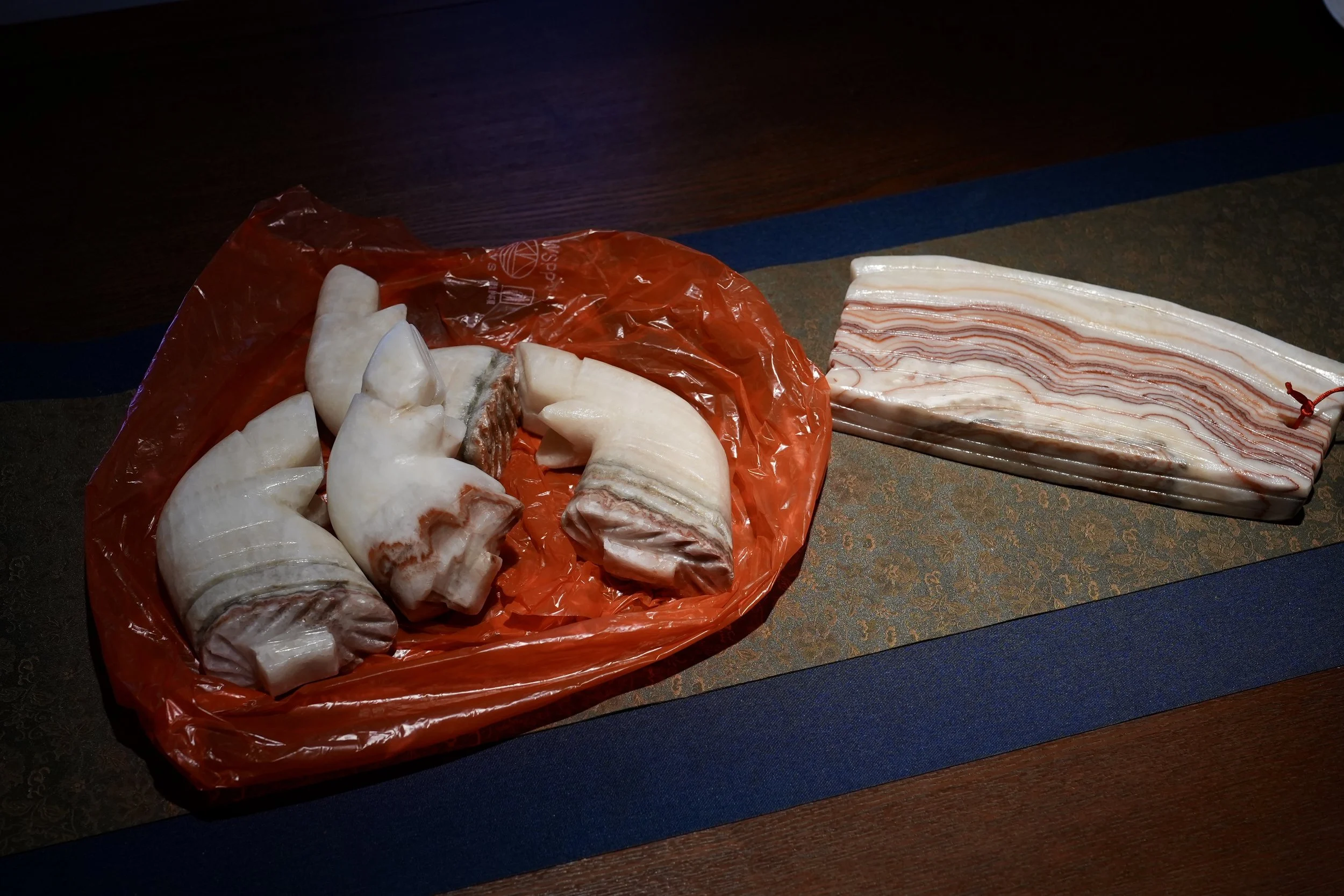
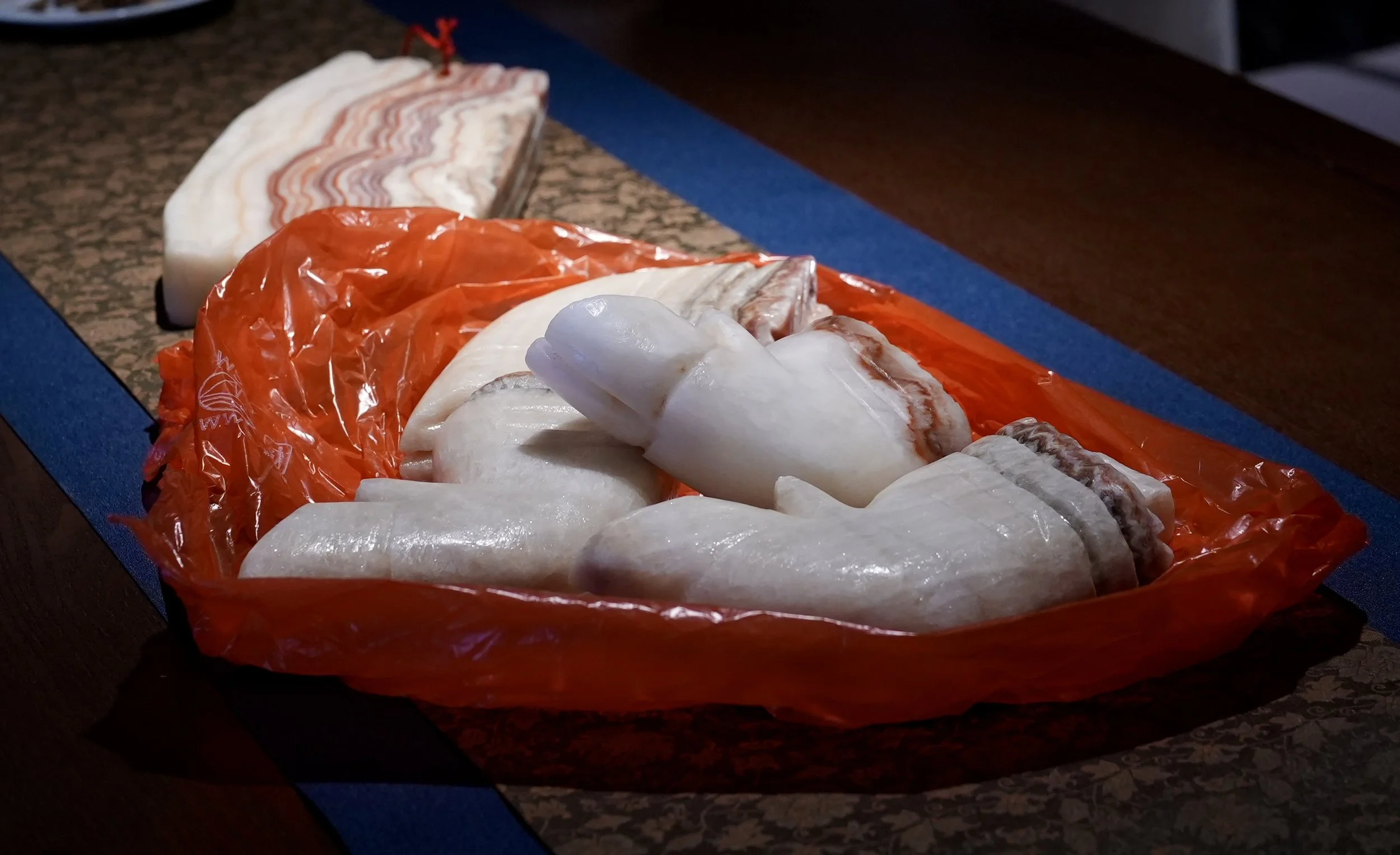
Scarcity as Inheritance and/or What the Small Hand Remembers (Nanning Tea House, 2026) presents stone pork trotters carved in jasper alongside red plastic bags, investigating how material scarcity becomes cultural inheritance. Through this installation, her archive moves from private documentation into public witness.
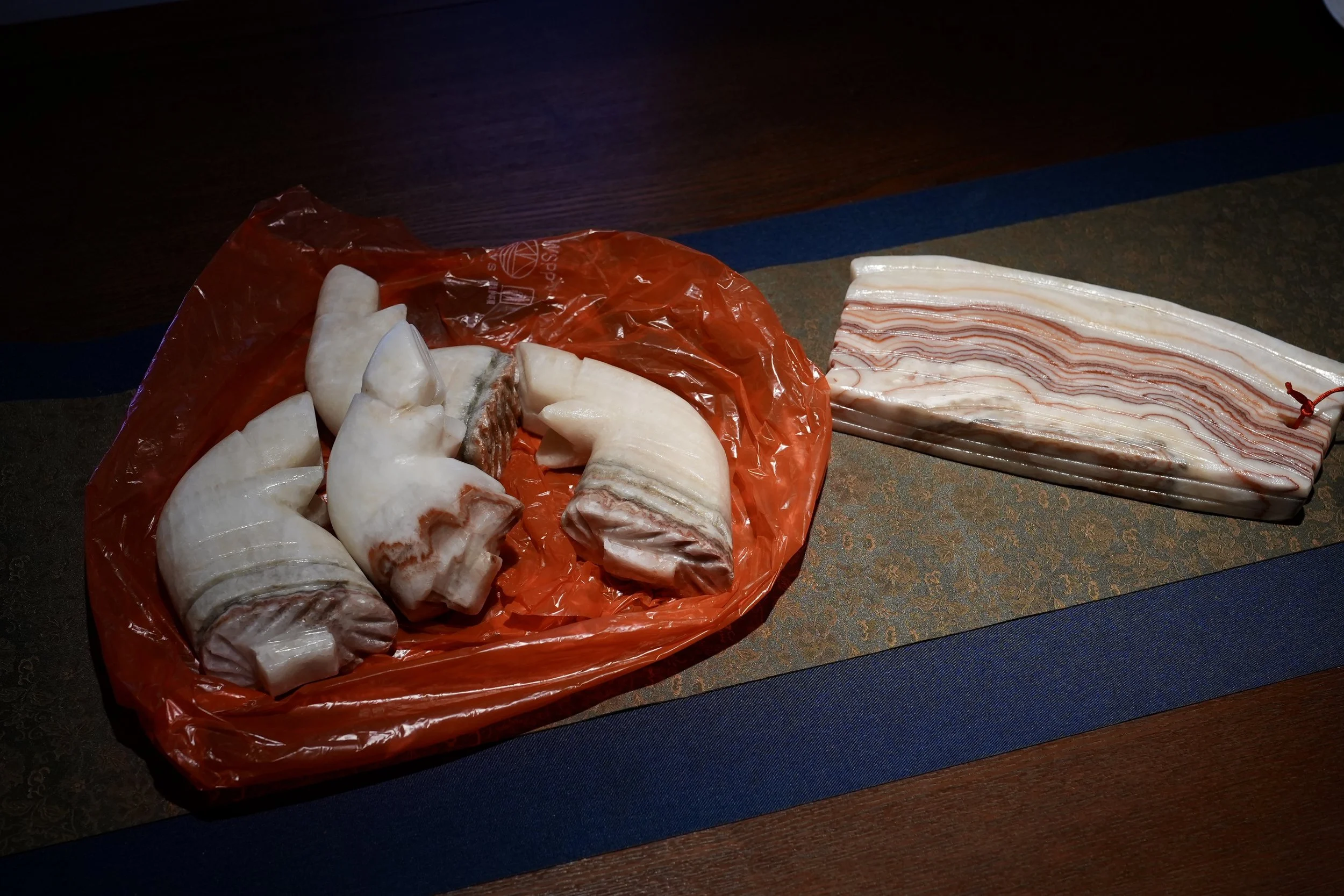
Installation View: Li Xia, "Pork Trotter and Pork Belly," Scarcity as Inheritance and/or What the Small Hand Remembers, Nanning Tea House, Guangxi, China 2026
Get in touch.